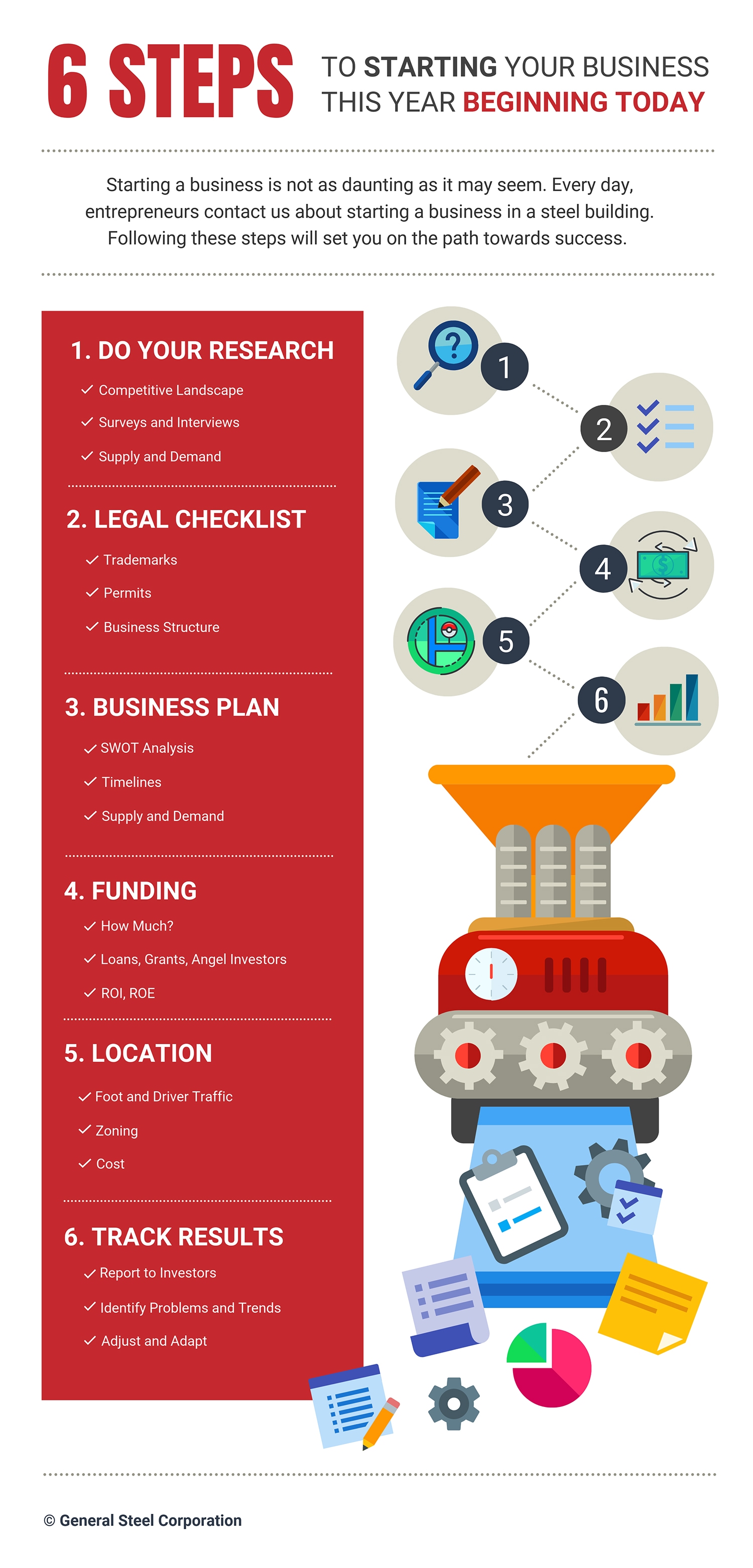
(1) Do Your Research:
Before you get started, you need to understand the market landscape for your idea. Conduct interviews and surveys, gather information on potential competitors, and consult other business owners. If you rush your business to the market without understanding contextual factors such as location, you run the risk of sudden failure.
(2) Make a Legal Checklist:
Many entrepreneurs underestimate the legal requirements of starting a business. Be sure to consult a lawyer on your business structure, name, tax IDs, permits, license, trademarks, patents, and more.
(3) Create a Business Plan:
Your business idea is only the beginning. A well-thought-out business plan provides a blueprint for your business from beginning to end. A business plan also is usually a baseline expectation is you’re looking for investors.
(4) Fund Your Business:
Your business plan should include a dollar amount that you need to start your business. If you’re unable to fund your business on your own, there are plenty of opportunities to raise funds, including small business loans, grants, angel investor groups, or venture capital investors, among others.
(5) Find a location:
The location of your business is vital to its success. From neighborhood style to tax incentives, your business location can affect your business image, competition, and revenue. You should evaluate buying versus renting your place of business and if you choose to build, making sure the size of the land supports operation now as well as in the future is equally important.
(6) Tracking Results:
Keeping your finger on the pulse of your business can be the difference between staying ahead of potential issues and letting inevitable problems derail your operation. Effectively tracking the results can be as easy as collecting surveys which can help you identify new opportunities and grow your business.