Hospitality, Football and Storms
The Southeast is known for a few things: hearty meals, warm hospitality and a passion for high-stakes college football. But when it comes to constructing new buildings in the region, it’s important to take notice of another well-known, more dangerous feature of the Southeast: severe weather.
Heavy rain, record floods and hurricane-force winds are an unfortunate trend in the Southeastern United States, especially for states along the Gulf and Atlantic coasts. Residents of this region face the biggest risk of costly property damage, total loss of property or displacement. Let’s take a look at why these risks are likely to increase and the importance of metal buildings for people like Johnny in North Carolina as well as other high-risk areas, such as Florida, Georgia, Alabama, and other surrounding states.
Rising Temperatures + Water Vapor = More Severe Weather
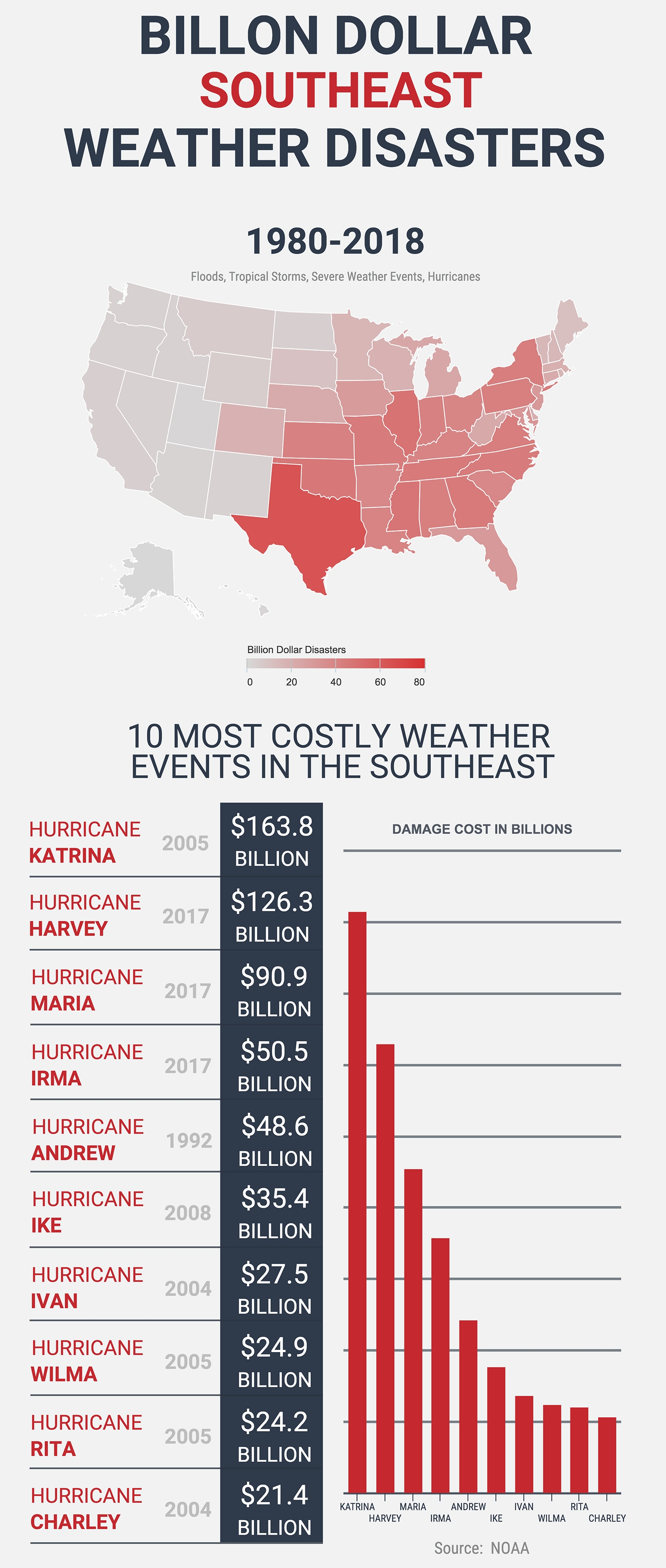
Areas like Florida, Georgia, Alabama are experiencing significantly more costly storms.
The Earth is getting warmer every year, and while there are debates as to why that’s happening, there is no debate that these higher temperatures are having a serious effect on the climate. As temperatures rise, more ocean water evaporates and is stored in the atmosphere as water vapor. These increased levels of water vapor create conditions more favorable to severe weather, including high-volume rain storms that can last for days, and even weeks.
These types of storms can lead to dangerous flooding, much like we saw recently in southeast Louisiana, where seven people died and 15,000 homes and businesses were destroyed. Unfortunately, the number of these intense storms will likely increase as temperatures continue to rise in this region and around the world.
Designed to Endure Storms
While droughts in the Midwest, heavy snow throughout the Rock Mountain region and earthquakes along the West Coast can cause billions of dollars in damage, the Southeast has seen significantly more billion dollar weather events since 1980. The damage from hurricanes in this area can be lessened by choosing to build an I-beam building rather than other types of steel structures. This is because prefab buildings are designed with the expectation of a severe weather event and engineered to endure these types of storms.
Looking Ahead
The National Oceanic and Atmospheric Administration (NOAA) recently released a report that predicts 5-8 hurricanes and 12-17 tropical storms for the upcoming hurricane season. That would make it the most active season since 2012, when Hurricane Sandy wreaked havoc on the Atlantic Coast.
“We’re seeing fewer hurricanes, but the ones we do see are more intense.”
Jim Elsner: National Typhoon Center
With temperatures trending upward, it’s likely these storms will increase in number and intensity in the coming years. If you’re in the market for a new building in the Southeast, a metal building is clearly the safest and most reliable choice.